
🌸संत Saint
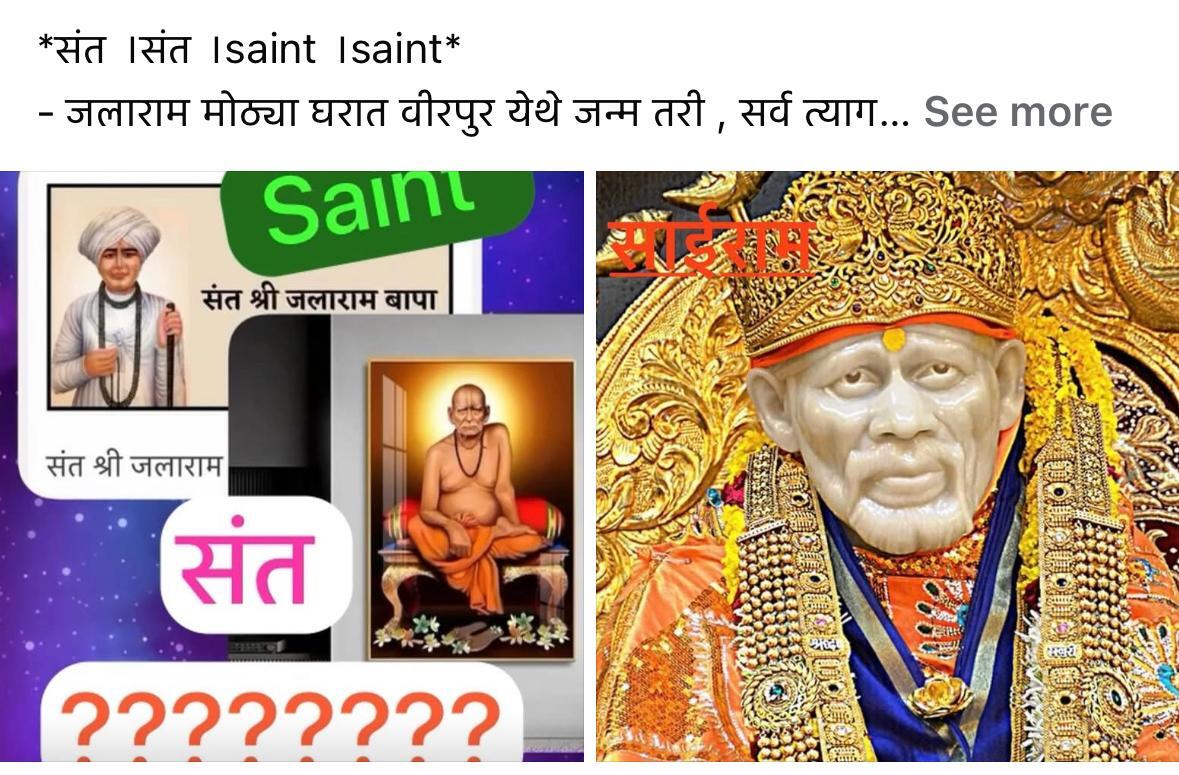
Saint
Jalaram was born into a well-off family in Virpur, yet he embraced complete renunciation and service. In 1817, he started a free food service called Sadavrat, which continues uninterrupted even today.
Many saints—like Jalaram, Ramdev Pir, and Balu Mama—were not necessarily happy in their earlier lives. In their search to understand why humans suffer, they turned toward God, universal energy, and spiritual practice. They accepted service to humanity as their true धर्म (duty).
Some figures like Sai Baba, Swami Samarth, and Sevagiri are believed to have appeared suddenly (self-manifested) to uplift people through teaching and service, delivering spiritual messages.
Saints like Gajanan, Tukaram, Nivrutti, Kabir, and Paramhansa inspired the masses toward devotion, chanting God’s name, and spiritual discipline for the welfare of humanity.
Some, like Dnyaneshwar, displayed astonishing wisdom and talent at a very young age—seen as a manifestation of divine or universal energy expressing itself through them.
Saints such as Ramdas, Nanak, Govind Singh, Gadge Baba, Vivekananda, and Pawas Nityanand became guides through their actions, achievements, and spiritual work.
Who is a saint? A person endowed with extraordinary talent and strength, devoted to selfless service and sacrifice, free from desires for wealth and pleasure, and empowered by divine energy.
The work of saints includes awakening society, removing blind faith (though they practiced devotion—so calling all devotion blind faith today is incorrect), serving others, helping people realize God or universal energy, and spreading the importance of spiritual practice.
Their primary mission: taking from those who have excess and helping the poor with food and support—alongside promoting devotion and spiritual practice.
Common traits of saints: simple clothing, humble living, high thinking, simple food, and dedication to feeding others. They often lived modestly, sometimes outside villages, and began their days early with prayer and spiritual discipline. When needed, they were believed to offer miraculous help to deserving people.
Were saints real? Questioning this is considered foolish by the author—because if they weren’t, places like Shirdi, Virpur, Akkalkot, Belur, Mohankheda, and Shegaon would not hold such significance today.
People visit these places not just out of faith, but to gain something from the saints’ spiritual practices.
The reason: saints are givers and selfless individuals.
Truth about saints: While alive, they were often underappreciated, disrespected, or even mistreated, sometimes forced to live outside villages. Their greatness was recognized only later—often after their passing.
Conclusion: Even though humans may have everything, they seek peace through spiritual practice and charity. Some individuals, inspired by divine knowledge, incarnate for the welfare of humanity. Through simplicity, charity, service, spreading knowledge, devotion, and spiritual discipline, saints teach that true fulfillment can be found.